The Great Encyclopedia of the Beandom · Character
The Great Zomart, Court Composer
The palace composer whose powdered wig, operatic dignity, secret fae-pop devotion, and emergency keyboard skills become essential to the final quest.
At a Glance
- Position: Court composer and palace organist
- Known for: Operas, formal musical standards, a towering powdered wig, and private fae-pop performances
- Collaborator: Bellissimo
- Instrument: The palace pipe organ
- Secret refuge: A tower room reached through a hidden organ passage
- Era: Age of Heroes
Overview
The Great Zomart is the Beandom’s court composer, a musician of established reputation whose works range from serious palace music to operas remembered for reasons that are not always entirely musical.
He serves as Bellissimo’s accompanist and rehearsal partner, composes dramatic retellings of important events, and maintains the standards expected of a royal musician. Beneath the powdered wig and formal exterior, however, Zomart harbors a secret enthusiasm for fae-pop.
Court Composer
Zomart works within the royal palace and accompanies Bellissimo on the pipe organ. He is expected to arrive with manuscripts prepared, introductions polished, and enough musical awareness to rescue a rehearsal when royal guests appear unexpectedly.
His place at court connects the Beandom’s heroic history to its artistic memory. Battles, scandals, magical incidents, and social disasters do not remain mere events for long once Zomart discovers that they can support a chorus and an unnecessarily elaborate overture.
Operatic Reputation
Zomart is credited with several celebrated or at least persistently performed works. The Magic Bagpipe develops a devoted following despite a premiere disastrous enough that later productions traditionally provide complimentary earplugs.
He later turns the mirror-sprite crisis into the opera Spritelies, best known for the song “Seize the Fae.” He also composes The Magic Panflute, a work sufficiently distant from popular music that no one could reasonably confuse the two styles.
Bellissimo’s Accompanist
Zomart accompanies Bellissimo during palace rehearsals and public performances. Their partnership requires him to follow her theatrical instincts, react to unexpected interruptions, and maintain enough musical dignity for both of them.
Bellissimo knows his habits well enough to recognize the musical sequence that opens the hidden passage beside his organ. She also knows the secret he guards more carefully than many state documents: the court composer enjoys fae-pop.
The Secret Fae-Pop Fan
Zomart’s public identity is built around classical prestige. In private, he sings fae-pop at an uncomfortable pitch, attempts dance moves beyond the reasonable limits of his age and costume, and wears a shimmering sequined suit.
The contrast is not simply hypocrisy. Zomart genuinely loves music that his professional circle would consider beneath him. He hides the interest because reputation at court can be less forgiving than a sea monster and considerably more talkative.
The Hidden Organ Passage
The palace pipe organ contains a concealed mechanism activated by a specific sequence of notes. The passage leads upward toward Zomart’s private tower refuge.
The design suits both composer and palace: a secret door controlled through music, protected from anyone unable to remember the tune, and accessible from the instrument Zomart is least likely to abandon.
Zomart’s Requiem
During the final crisis, Sir Roderick and Bellissimo discover that a creature roaming the palace is vulnerable to fae-pop. The problem is not locating someone capable of performing it. The problem is persuading the Beandom’s most ceremonious court composer to admit he knows the music and then leave the safety of his tower.
Sir Roderick reaches Zomart through the hidden passage and finds him in full private-performance attire. Zomart initially resists entering the dangerous corridors, pausing even to retrieve his powdered wig before participating in what he considers a near-blasphemous use of the royal organ.
Bellissimo appeals to him directly, and Zomart ultimately chooses to help. His knowledge of fae-pop becomes a tactical weapon, proving that the musical taste he concealed is precisely the skill the realm requires.
Appearance and Manner
- Public style: Formal court attire and an exceptionally tall powdered wig.
- Private style: An iridescent sequined suit suitable for fae-pop dancing.
- Instrument: Palace pipe organ.
- Temperament: Cultured, nervous, image-conscious, exacting, and ultimately helpful.
- Primary fear: Being eaten, professionally embarrassed, or seen without the wig—not necessarily in that order.
Why He Matters
Zomart demonstrates that apparently frivolous interests can become essential knowledge. His formal career earns him a place at court, but the music he hides gives him the means to protect it.
He also preserves the Beandom’s history through art. Zomart’s operas may exaggerate, rearrange, rhyme, and occasionally require protective equipment, but they ensure that the realm remembers its disasters with melodies attached.
The court composer considered fae-pop beneath his dignity until it became the only thing standing between the palace and destruction.
—The Chronicler
Appearances
- A Quest That Doesn’t Go…Well — palace accompaniment and court performance
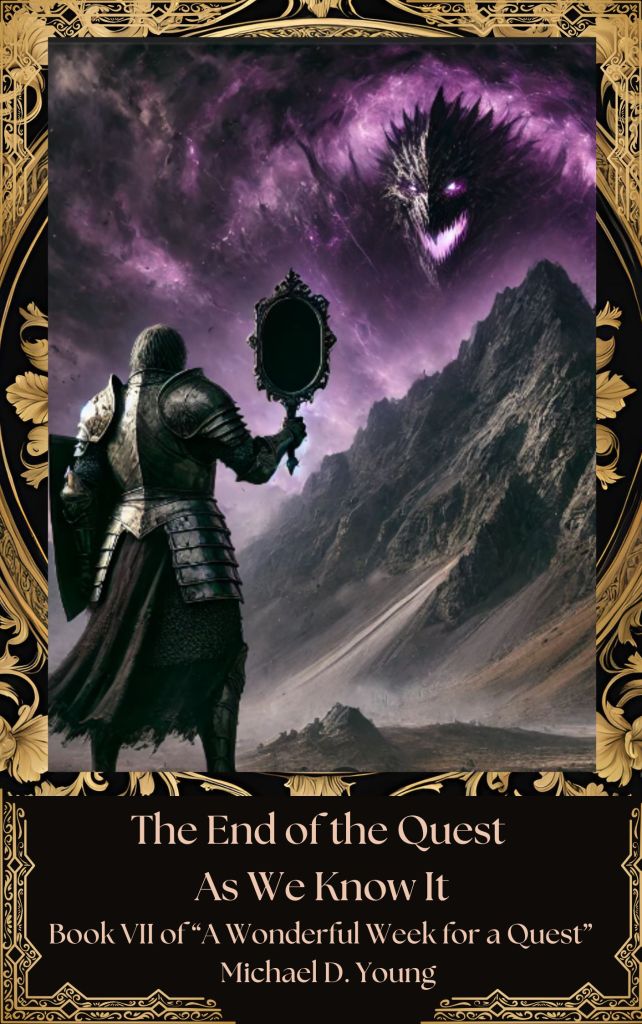
- The End of the Quest as We Know It — hidden tower, fae-pop secret, and the palace creature
- A Wonderful Week for a Quest — the complete original series
Related Entries
Continue Exploring
Enter the abandoned palace, find the hidden staircase behind the organ, and discover why the final quest depends on a forbidden dance tune.
 Michael D. Young