Writers are often asked where their ideas come from, as though there were a dependable store where stories can be purchased by the dozen. My honest answer is that ideas usually arrive indirectly. A small detail, image, person, question, or contradiction catches in the mind and begins connecting itself to other things.
Originally published February 1, 2010. Substantially revised and expanded July 2026.
Ideas Often Arrive While You Are Doing Something Else
Many of my ideas have appeared during ordinary activities rather than formal brainstorming sessions. Commuting by train and light rail gave me time to observe people and wonder about lives I knew nothing about. Working on a sales floor allowed part of my mind to wander while my hands completed familiar tasks.
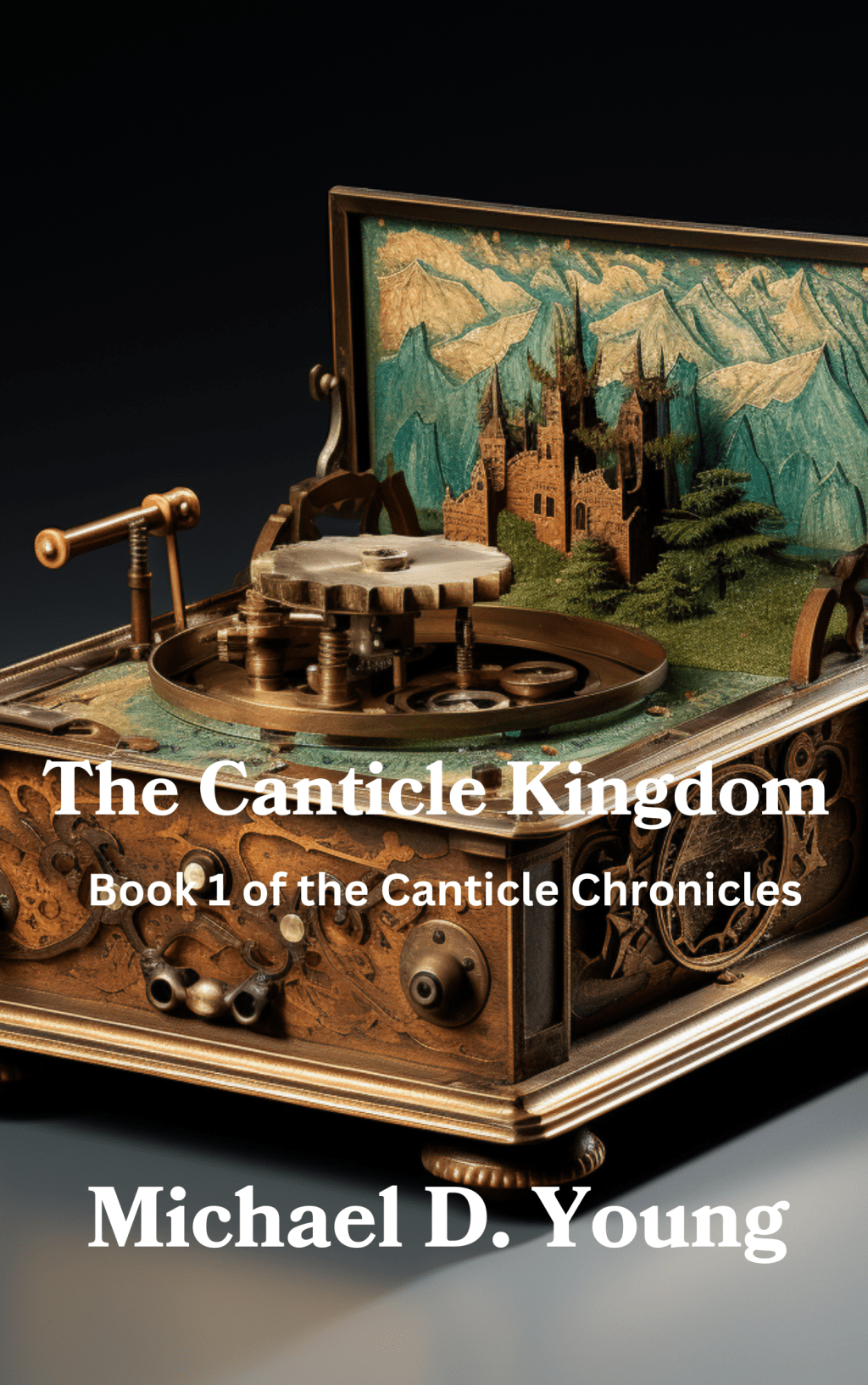
The original idea for The Canticle Kingdom arrived while I was straightening shelves at a Super Target in Orem, Utah: what if people lived inside a music box and needed help from someone in the outside world? The idea did not come with a complete plot. It came as a question with enough energy to preserve.
Observe Specific Details
General observations produce general ideas. Specific details create possibilities.
- A woman on a train carries two birthday cakes but no gifts.
- A child wears rain boots during a week without rain.
- A locked shop displays a fresh bouquet every morning.
- A man reads the same unopened letter during an entire commute.
- Two strangers greet the same dog by different names.
You do not need to invent an explanation immediately. Record the detail and let your mind ask why.
Use “What If?” to Create Movement
An observation becomes a story seed when it is placed under pressure:
- What if the music box is a real kingdom?
- What if the letter changes every time the man opens it?
- What if both strangers are telling the truth about the dog?
- What if the bouquet is a warning rather than a gift?
- What if the child’s boots are the only protection from something no adult can see?
Do not stop at the first answer. List several possibilities, including one serious, one comic, one frightening, and one that reverses your first assumption.
Combine Unrelated Ingredients
Many ideas feel original because they combine familiar elements in an unfamiliar way. Choose two items from different parts of your life:
- A choir rehearsal and a political conspiracy
- A family road trip and a magical inheritance
- An online class and a haunted castle
- A lost dog and a time-travel experiment
- A hymnbook and a kingdom whose magic depends on music
The combination does not need to make sense immediately. Tension between the ingredients can generate the story.
Capture the Idea Before It Disappears
An idea that feels unforgettable at night can vanish by morning. Keep a dependable capture system:
- A notes app that synchronizes across devices
- A pocket notebook
- A voice-memo folder
- An email sent to yourself
- A single idea document organized by genre or project
Record more than a title. Include the image, question, emotional tone, and any connection that made the idea exciting. “Music-box kingdom” is useful. “A lonely boy discovers that the figures in his grandmother’s music box are alive and losing their songs” is easier to recover later.
Not Every Idea Needs to Become a Book
Some ideas are poems, scenes, jokes, characters, settings, or exercises. Do not force every spark into a novel. Ask what size the idea naturally supports and what additional conflict it would need to grow.
Choose Which Idea to Develop
When several ideas compete, consider:
- Which idea keeps returning?
- Which one contains a character with a strong desire?
- Which one suggests escalating problems rather than a single clever moment?
- Which one fits the time and skills you currently have?
- Which one are you willing to revise after the first excitement fades?
Ideas are gifts, but development is work. Preserve many possibilities, then commit to the one you are prepared to carry beyond the spark.
Turn story sparks into stronger plots with Fiction Fundamentals. For manuscript development, editing, cover design, and layout, visit Professional Creative Services.

About Michael D. Young
Michael D. Young writes family-friendly fantasy, devotionals, hymn history, and books for young readers. He has sung with The Tabernacle Choir at Temple Square since 2010 and works as an instructional designer. Explore his books, music, and creative projects.
 Michael D. Young
6 responses to “Where Writers Get Ideas—and How to Capture Them”
[…] Where Writers Get Ideas—and How to Capture Them helps students notice story possibilities and save them before they disappear. […]
[…] Students learned that ideas can begin with observation, questions, combinations, memories, images, music, and ordinary objects. See Where Writers Get Ideas—and How to Capture Them. […]
[…] Where Writers Get Ideas—and How to Capture Them […]
[…] Where Writers Get Ideas—and How to Capture Them […]
[…] Where Writers Get Ideas—and How to Capture Them […]
[…] Where Writers Get Ideas—and How to Capture Them […]