September 11, 2001, divided ordinary life into a before and an after for millions of people. I was a junior in high school, heading to class, when the news began to spread. In the years that followed, I became a husband, father, college graduate, author, and member of The Tabernacle Choir at Temple Square. Yet the emotional weight of that day has never become merely historical.
Originally published September 12, 2011. Substantially revised and expanded July 2026.
Ten years after the attacks, I had the privilege of singing in a commemorative Choir special narrated by Tom Brokaw. The program opened with “Shenandoah,” a piece whose broad, longing melody created space for remembrance before words attempted to explain anything.
Remembering Without Turning Tragedy into Spectacle
People often said that the television coverage looked “like a movie.” The comparison reflected how difficult the images were to comprehend, but real tragedy is not a story designed for our entertainment. The people who died were not characters, and the people who survived did not reach a convenient final chapter when the broadcast ended.
For writers and artists, that distinction matters. Reality may teach us about courage, fear, grief, evil, sacrifice, and recovery, but those lessons carry a responsibility. We should not reduce suffering to a dramatic device or borrow another person’s pain without humility.
What Real Courage Looks Like
The stories of September 11 include firefighters climbing stairs while others descended, passengers acting together on Flight 93, strangers guiding one another through smoke, medical workers preparing for the wounded, and families rebuilding lives after devastating loss.
Real courage is not the absence of fear. It is action shaped by duty, love, or concern for someone else while fear remains present. Fictional heroes become more believable when their bravery costs something and when they act for reasons deeper than a desire to appear heroic.
Evil Begins with the Denial of Human Worth
The attacks also demonstrated the terrible consequences of an ideology that treats innocent people as expendable. Villainy in fiction is most disturbing when it follows a recognizable process of self-justification: a person decides that an abstract cause matters more than another human life, then builds arguments that make cruelty seem necessary.
Writers should be careful here as well. A compelling antagonist needs understandable motives, but understanding a motive is not the same as excusing the harm. Moral complexity should deepen the truth of a story, not erase responsibility.
Grief Does Not Follow a Simple Plot
Stories often compress grief because a narrative has limited space. Real grief rarely moves in a straight line. Anniversaries, songs, photographs, places, and ordinary routines can reopen feelings years later. Recovery does not mean forgetting, and hope does not require pretending the loss was smaller than it was.
That is one reason commemorative music can matter. Music does not solve grief. It gives people a shared language when ordinary speech feels inadequate. Singing in the tenth-anniversary special reminded me that remembrance can be both public and deeply personal.
The Work of Rebuilding
One of the enduring lessons of September 11 is that people can lose homes, loved ones, health, security, and confidence in the future—and still begin rebuilding. That process is not quick or complete, but it reveals a form of hope grounded in action.
- Communities care for those who are grieving.
- Families preserve names and stories.
- Public servants continue difficult work.
- Artists create spaces for remembrance.
- Individuals choose compassion instead of suspicion.
- People continue building lives without denying what was lost.
What I Hope to Carry Forward
Remembering September 11 should do more than return us to fear. It should renew our gratitude for people who serve, our concern for those who grieve, our resistance to hatred, and our determination to recognize the worth of every human being.
As a writer, I want to portray courage without making it easy, evil without glamorizing it, and hope without making it shallow. As a singer, I remain grateful for the opportunity to join my voice with others in honoring lives that should never be reduced to numbers.
Read more about the Choir’s tenth-anniversary performance of “Shenandoah” on The Tabernacle Choir’s official site. Visit Music and Poetry for my sacred music, hymn projects, and recordings.
About Michael D. Young
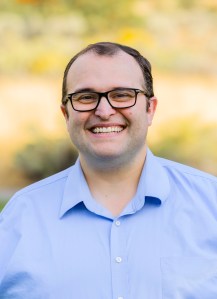
Michael D. Young writes family-friendly fantasy, devotionals, hymn history, and books for young readers. He has sung with The Tabernacle Choir at Temple Square since 2010 and works as an instructional designer. Explore his books, music, and creative projects.
 Michael D. Young
6 responses to “Learning from 9/11: Heroes, Grief, and Hope”
beautiful. love the summation line of, "In real life that is how a lot of stories go, not all happiness, not all sadness, but somewhere in between with hope for the future. " lovely, true.
I believe in real heroes.
It's the stories where there evil redeems itself that really touch me. Where the ordinarily heartless, self-absorbed or greedy bloke finds himself compelled to run into a sweltering pit of flames to save complete strangers. There's something about the ability to change for the better that warms me.
What a great post! Thanks for sharing it. Your Christmas short story sounds like fun. An original twist. Your days are full. When you do find time to write?
As for writing time, I just make sure that I am always ready to write wherever I am. I carry pen and paper everywhere, have my laptop handy, and just snatch up any few minutes I have. That adds up. Then, my wife likes to go to bed early and I'm a night owl, so that gives me a few hours at night once she and the kids have hit the sack.
[…] Learning from 9/11: Heroes, Grief, and Hope […]