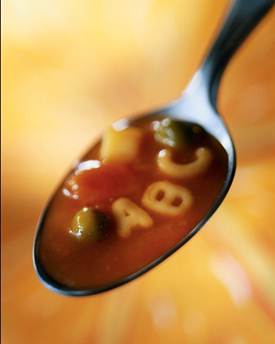
Good prose is like good soup: it needs the right ingredients in the right proportions. Too little variety makes the result bland. Too much of one spice overwhelms everything else. Sentence craft works the same way.
Originally published October 19, 2010. Substantially revised and expanded July 2026.
Mix Long and Short Sentences
Long sentences can carry layered description, complex thought, or a building sense of momentum. Short sentences create emphasis. They stop the reader.
If every sentence is short, the prose becomes choppy. If every sentence is long, the reader may lose the path through the paragraph. Rhythm comes from contrast.
The hallway stretched ahead, lined with portraits whose painted eyes seemed to follow Mara as she carried the stolen key toward the locked room.
Then one of them blinked.
The second sentence gains force because it follows a longer one.
Use Description Like Seasoning
Adjectives and adverbs are not forbidden. They become a problem when they repeat information or delay the important noun and verb.
Overseasoned: The extremely tired, very weary traveler slowly and painfully walked across the hot, dusty road.
Stronger: The traveler limped across the road, dragging one boot through the dust.
The stronger version uses a more precise verb and one concrete action. It gives the reader an image instead of a pile of labels.
Vary Sentence Beginnings
Writers often fall into a subject-verb pattern:
Mara opened the door. She entered the room. She saw a mirror. She touched the glass.
The information is clear, but the rhythm is mechanical. Try changing the order and combining related actions:
Behind the door waited a room with no windows. Mara stepped inside. At its center stood a mirror, silvered with age. The moment her fingers touched the glass, the reflection smiled.
Choose Concrete Verbs
Strong verbs describe the action more precisely. A character can walk, but they can also limp, stride, shuffle, stalk, wander, march, or tiptoe. Each verb suggests a different body, purpose, and mood.
Do not replace every simple verb with an unusual one. “Said” is often better than a distracting synonym. Precision matters more than novelty.
Let Punctuation Control Pace
Punctuation changes how a sentence moves. A comma offers a light pause. A period ends the thought. A dash can interrupt or redirect. A colon prepares the reader for what follows.
Multiple exclamation points rarely create more excitement. The words and situation should carry most of the emotion.
Match the Recipe to the Scene
An action scene may use shorter sentences and fewer reflective clauses. A quiet emotional scene may slow down and allow longer observations. A comic passage may build through repetition and then break the pattern for the punch line.
Sentence variety is not decoration. It helps control attention, emphasis, mood, and speed.
A Sentence-Soup Revision Exercise
- Choose one paragraph from your draft.
- Count the words in each sentence.
- Underline the first three words of every sentence.
- Circle adjectives and adverbs.
- Highlight the main verb in each sentence.
- Revise one sentence for length, one for a stronger verb, and one for a different opening.
- Read the paragraph aloud and listen for rhythm.
The goal is not to make every sentence different. It is to avoid dumping the whole pepper shaker into the bowl.
Find more practical prose exercises through Fiction Fundamentals. For line editing, manuscript feedback, and publishing support, visit Professional Creative Services.

About Michael D. Young
Michael D. Young writes family-friendly fantasy, devotionals, hymn history, and books for young readers. He has sung with The Tabernacle Choir at Temple Square since 2010 and works as an instructional designer. Explore his books, music, and creative projects.
 Michael D. Young
6 responses to “Sentence Soup: How to Vary Sentence Structure”
Awesome analogy! I especially like the pepper part. I want to be in your class too.
Thank you for shaaring this
[…] Sentence Soup: How to Vary Sentence Structure demonstrates how rhythm changes when every sentence begins or unfolds the same way. […]
[…] for repetitive patterns and practiced changing sentence beginnings, lengths, and structures. See Sentence Soup and Varying Sentence […]
[…] Sentence Soup: How to Vary Sentence Structure […]
[…] Sentence Soup: How to Vary Sentence Structure […]