The Zan-Gah series uses a prehistoric world without dinosaurs or supernatural forces to tell stories about courage, family, trauma, migration, and survival. This article combines my original reviews of Zan-Gah, The Beautiful Country, and Dael and the Painted People into one clearer overview of the series.
Originally published April 6, 2010. Substantially revised and expanded July 2026.
Zan-Gah’s First Journey
The first book follows Zan-Gah, a young member of a prehistoric tribe who gains status after killing a lion. When his twin brother Dael disappears, Zan-Gah sets out to find him and prove himself as an adult.
The journey takes him across harsh deserts and into danger from wild animals and hostile tribes. The adventure is exciting, but its strongest concerns are family loyalty, courage, forgiveness, and the use of intelligence and innovation in a world where survival cannot be taken for granted.
The Beautiful Country
The second installment begins more quickly because the characters and tribal conflicts are already established. Dael has suffered a devastating loss and moves toward instability, while the people migrate into land once held by their defeated enemies.
The tribe gradually divides around the two brothers. That conflict gives the sequel emotional weight beyond another wilderness journey. Leadership, grief, loyalty, and fear become as dangerous as the physical environment.
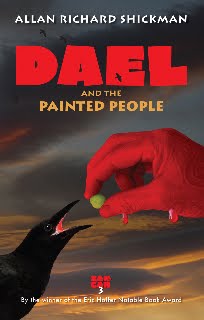
Dael and the Painted People
The third book shifts attention away from Zan-Gah and follows Dael during a sojourn among a people who paint their bodies red. The change in viewpoint gives the series a fresh direction and allows the reader to see a new culture through a character already carrying deep emotional wounds.
The book explores the Painted People’s customs, daily life, and social expectations as Dael and his companion try to enter the community and inevitably disturb parts of it. The imagery is vivid, and the volume has enough independence to be read as a distinct adventure, although knowledge of Dael’s earlier experiences adds meaning.
What Worked Across the Series
- A convincing prehistoric environment: The books build danger from climate, distance, animals, tribal conflict, and limited resources.
- Family as the central stake: Zan-Gah’s first quest begins with his missing twin, and the brothers’ relationship continues shaping later conflicts.
- Consequences that continue: Trauma and violence are not erased when one adventure ends.
- Cultural variety: Different tribes and the Painted People have customs that affect how characters understand belonging and conflict.
- Moral concerns: Courage, forgiveness, innovation, family loyalty, and leadership remain important alongside survival.
Dael’s Trauma and the Series’ Darker Material
Dael’s experiences push parts of the series beyond a simple adventure for young children. His grief, instability, and violent surroundings create intense scenes. Those elements can support meaningful discussion about trauma and recovery, but adults may wish to consider a younger reader’s sensitivity before recommending the books.
The series is strongest when Dael’s suffering is treated as an ongoing reality rather than a single plot obstacle. His behavior affects his brother, his community, and the new people he encounters.
Language and Audience
The prose is generally direct and approachable, making the stories accessible to younger readers. Occasionally, however, a word such as “accouterments” or “ululated” may exceed the vocabulary level suggested by the surrounding style.
Unfamiliar vocabulary is not automatically a flaw. Context can help readers grow. The challenge is maintaining a consistent reading experience and deciding whether a rare word adds precision, atmosphere, or only an avoidable interruption.
What Writers Can Learn
- A survival story becomes more memorable when the journey protects a relationship rather than only the hero’s life.
- A sequel should carry emotional consequences forward instead of resetting injured characters.
- Changing viewpoint can renew a series and reveal a familiar conflict from another angle.
- An invented prehistoric culture needs customs, resources, fears, and social rules—not merely primitive clothing.
- Vocabulary should match both the intended audience and the narrative voice.
Who May Enjoy the Series
The books may appeal to upper-middle-grade and young-adult readers who enjoy survival journeys, prehistoric settings, sibling relationships, tribal conflict, and adventures with a strong moral center. Some violence and frightening situations make them better suited to readers prepared for the series’ more intense material.
Explore more family-friendly fantasy and adventure on Fiction Quests. For lessons on culture-building, sequel consequences, viewpoint, and younger audiences, visit Fiction Fundamentals.

About Michael D. Young
Michael D. Young writes family-friendly fantasy, devotionals, hymn history, and books for young readers. He has sung with The Tabernacle Choir at Temple Square since 2010 and works as an instructional designer. Explore his books, music, and creative projects.
 Michael D. Young
2 responses to “Zan-Gah Series Review: Prehistoric Adventure, Family, and Survival”
WOW! All of a sudden the Zan-Gah orders have started pouring in. I don't know what happened. It must be all of those blog reviews I have been getting lately. Not a single order for a while, and suddenly I am selling Zan-Gah by the case! I may even have to go to press again (3rd printing!). My thanks to The Canticle, to my many reviewers, and to all of my new readers. People are paying attention.
[…] Zan-Gah Series Review: Prehistoric Adventure, Family, and Survival […]