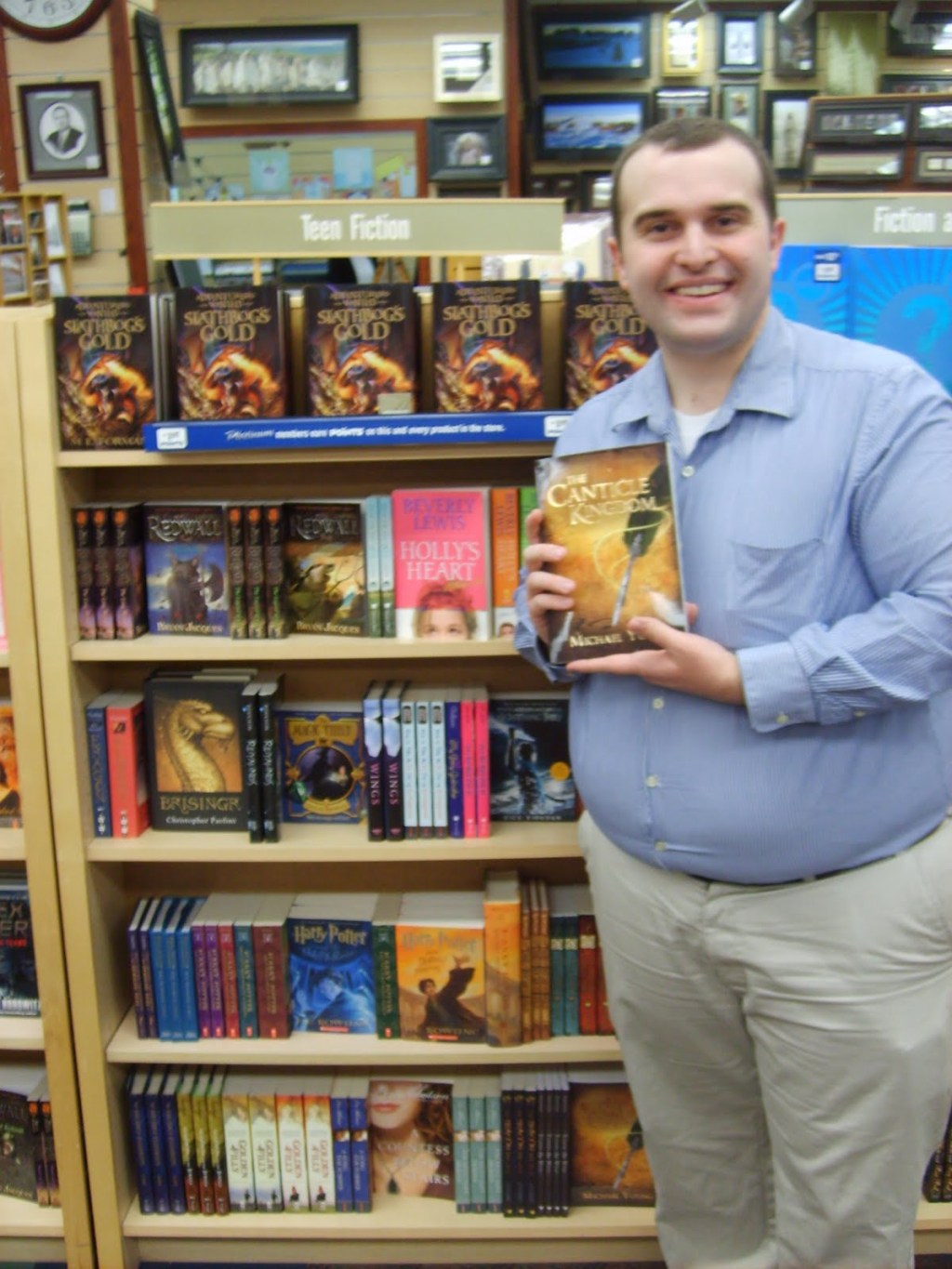
Some emails change the direction of a life. Mine arrived after years of writing, revising, waiting, and wondering whether the manuscript that became The Canticle Kingdom would ever reach readers.
Originally published February 5, 2010. Substantially revised and expanded July 2026.
The Long Wait Before the Message
I had submitted the book to Cedar Fort and received encouraging feedback rather than an immediate contract. The answer was essentially, “We are interested, but the manuscript needs work.” I spent months revising according to the reviewer’s suggestions and submitted the new version at the beginning of the summer.
Then I learned that the manuscript needed to pass through one more review. After a process that had already taken years, the final decision felt very close and impossibly far away. I checked email far too often.
The Email
One afternoon in late July, I was alone in our apartment in Orem when a message appeared in the folder where I kept correspondence from the publisher. I knew before opening it that the email probably contained the answer—good or bad.
I have good news. We want to publish Inside the Box.
Inside the Box was the working title at the time. I nearly fell out of my chair. Then I reached for the phone and called my wife, parents, siblings, friends, and anyone else who had followed the book’s long journey.
I was working a graveyard shift and should have gone to sleep before work. Sleep was not especially realistic after that message.
What the Acceptance Did—and Did Not—Mean
The email did not mean the book was finished. Editing, cutting, cover development, proofs, metadata, advance copies, and promotion still waited ahead. It also did not mean every future manuscript would receive the same answer.
What it did mean was that years of private effort had crossed into collaboration. Other people had decided the story was worth investing time and resources to publish.
Lessons I Still Carry
- A conditional answer can be an opportunity. “Revise and resubmit” is not a guarantee, but it is more useful than treating feedback as rejection.
- Support matters. The joy of the moment was multiplied because family and friends understood how long the journey had taken.
- Working titles can change. A book may evolve in title, length, design, and positioning before publication.
- Acceptance is a milestone, not an identity. The work that came before still mattered, and the work that came afterward still required humility.
- The next stage begins immediately. A “yes” creates new responsibilities as well as celebration.
For Writers Waiting on an Answer
Waiting can make one submission feel like the entire future. Keep records, respect the stated response time, and continue writing. Research the next appropriate opportunity rather than refreshing the inbox all day.
No acceptance can retroactively make every earlier hour easy. It can, however, reveal how those ordinary hours accumulated into something another person was willing to champion.
The Memory Behind the Book
Books continue to change after release through new editions, formats, covers, and readers. The moment of first acceptance remains fixed: a quiet apartment, an email folder, a working title, and a sentence I had hoped for through years of uncertainty.
Strengthen your own stories through Fiction Fundamentals. For editing, manuscript feedback, cover design, and layout, visit Professional Creative Services.

About Michael D. Young
Michael D. Young writes family-friendly fantasy, devotionals, hymn history, and books for young readers. He has sung with The Tabernacle Choir at Temple Square since 2010 and works as an instructional designer. Explore his books, music, and creative projects.
 Michael D. Young
2 responses to “The Day My First Novel Was Accepted”
[…] The Day My First Novel Was Accepted […]
[…] The Day My First Novel Was Accepted […]