Writers are sometimes told—directly or indirectly—that certain subjects belong to certain kinds of authors. A man may be expected to write adventure rather than tenderness. A woman may be expected to write relationships rather than action. Those assumptions limit both writers and readers.
Originally published February 22, 2011. Substantially revised and expanded July 2026.
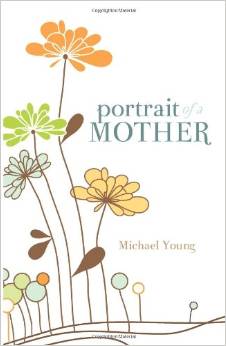
A Mother’s Day Story Written by a Father
Portrait of a Mother is a short, tender story about a child named Nina who must choose her mother and discover what qualities truly define motherhood. I wrote it as a husband, father, and son—not because I believed I could speak for every mother, but because love, gratitude, family, and the longing to belong are human subjects rather than gendered territory.
Writing outside the narrow expectations people place on us can be valuable. It requires humility, listening, and a willingness to recognize where our own experience ends, but it also allows empathy to grow.
What Makes Someone a Mother?
The story’s central question is larger than a job description. Motherhood may include birth, adoption, caregiving, teaching, sacrifice, protection, patience, correction, comfort, and countless ordinary acts that rarely receive public attention.
A story cannot define every form of motherhood in a few pages. It can invite a child or family to notice the qualities that make a relationship feel safe, loving, and enduring.
Writing Tenderness Without Sentimentality
Sentimental subjects create a particular craft challenge. The writer wants the reader to feel something, but demanding an emotion too aggressively can produce the opposite result.
- Use concrete actions. A remembered gesture often carries more feeling than a paragraph explaining love.
- Let the character make a choice. Emotion becomes stronger when it changes what someone does.
- Avoid declaring every feeling. Give the reader space to participate.
- Earn the ending. A tender conclusion should grow from the story rather than arrive as a separate message.
- Respect the subject. A parent should feel like a person, not a symbol placed on a pedestal.
Writing a Very Short Story
Portrait of a Mother is brief. Short form does not mean the work is simple. A small book has less room for setup, repetition, explanation, and secondary material. Every scene must contribute to the central emotional movement.
In a short story for families, clarity matters. The premise should be easy to understand, but the feeling should not be reduced to a slogan. The writer needs enough specificity to make the characters real and enough restraint to keep the story moving.
Breaking Stereotypes Requires More Than Reversing Them
A stereotype is not defeated merely by assigning an unexpected subject to an author. A man writing a Mother’s Day story can still rely on shallow assumptions. The real work is to approach the characters with curiosity, dignity, and attention.
Writers should be free to explore beyond the roles assigned to them, but freedom carries responsibility. Research when needed. Listen to people with direct experience. Invite thoughtful readers to identify blind spots. Revise when the story communicates something different from what you intended.
What the Story Taught Me
- Emotional stories benefit from restraint.
- A short book can still ask a large question.
- Writers should not allow gender expectations to determine every subject they approach.
- Empathy grows through attention rather than assumption.
- Family stories become stronger when they honor complicated, individual people.
A Story for Mothers and the People Who Love Them
I hoped Portrait of a Mother could be shared between children and the women who care for them. The story is small, but the gratitude behind it is not. Motherhood is made visible through thousands of actions that may look ordinary from the outside and become foundational inside a child’s life.
Explore more family-friendly stories on my Picture Books page. Learn more about my fiction, music, teaching, and family-centered creative work on About Michael D. Young.

About Michael D. Young
Michael D. Young writes family-friendly fantasy, devotionals, hymn history, and books for young readers. He has sung with The Tabernacle Choir at Temple Square since 2010 and works as an instructional designer. Explore his books, music, and creative projects.
 Michael D. Young
4 responses to “Portrait of a Mother: Writing a Mother’s Day Story Across Stereotypes”
Great post over at the man cave. I'm glad you had fun at LTUE. I enjoyed it too.
We enjoyed having you at LTUE. I'm looking forward to reading "The Last Archangel"!
[…] Portrait of a Mother: Writing a Mother’s Day Story Across Stereotypes […]
[…] Portrait of a Mother: Writing a Mother’s Day Story Across Stereotypes […]