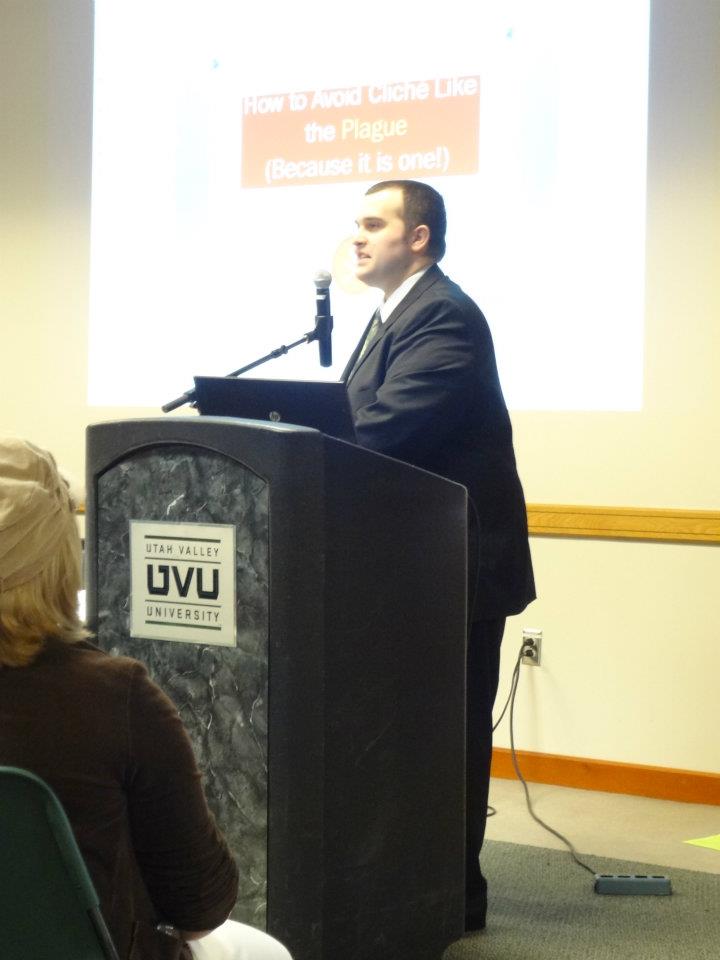
These two presentation decks were created for my 2015 LDStorymakers conference classes. One explores ways music can strengthen fiction; the other introduces the creative and technical process of producing audiobooks. I have preserved the original downloads and added summaries so writers can decide which resource will be most useful.
Originally published May 18, 2015. Substantially revised and expanded July 2026.
The examples and specific production tools reflect the time when the presentations were created. Technology has changed, but the core principles—using sound intentionally, preparing a script, directing performance, recording clean audio, and revising by listening—remain valuable.
Weaving Threads of Song: Using Music in Fiction
Music can do more than decorate a scene. It can reveal character, establish culture, trigger memory, shape pacing, and become part of the story’s conflict or magic system.
The presentation considers ways writers can use music to:
- Give a character a musical identity
- Connect songs to memory and emotion
- Build fictional traditions, rituals, and communities
- Use rhythm and repetition to influence prose
- Make musical performance part of a scene’s goal and conflict
- Research instruments, performers, and terminology accurately
- Avoid relying on song lyrics the writer does not have permission to reproduce
Creating Audiobooks
An audiobook is not simply a person reading text into a microphone. It is a performance and production project that requires preparation, consistency, technical care, and patient review.
The presentation introduces topics such as:
- Preparing the manuscript for narration
- Choosing a narrator or deciding whether to self-narrate
- Developing distinct but sustainable character voices
- Maintaining pronunciation and performance notes
- Creating a quiet recording environment
- Monitoring pacing, breath, mouth noise, and consistency
- Editing mistakes without making the performance sound unnatural
- Listening to the finished audio as an audience member
Early Narration Experiments
Before producing later commercial audiobooks, I gained practical experience by narrating serial fiction for BigWorldNetwork. I recorded my own Canticle stories, including Canticle of Night and Canticle of Dawn, and also narrated another creator’s steampunk adventure, The Adventures of Phineas Frakture.
I also narrated The Last Time, a modern fantasy story that was featured as a Valentine’s release on the same platform. These projects taught me how differently prose behaves when it must be spoken consistently across episodes rather than read silently on a page.
- Character voices must remain sustainable over long sessions.
- Pronunciations need to be decided and documented early.
- Sentence structures that look acceptable may feel awkward aloud.
- Serial narration requires consistent energy and sound from episode to episode.
- Performing another writer’s work requires interpretation without taking ownership away from the text.
The original platform and episode links are no longer active, but those early recordings helped establish the habits that later informed my audiobook presentations and productions.
A Useful Exercise: Read Your Work Aloud
Even writers who never plan to produce an audiobook can learn from narration. Reading a chapter aloud reveals:
- Sentences that are too long to speak comfortably
- Repeated words and sentence patterns
- Dialogue that does not sound natural
- Unclear speaker attribution
- Awkward transitions
- Names or invented terms that are difficult to pronounce consistently
- Places where the emotional pace changes unexpectedly
Record a short sample and listen without reading along. The distance between speaking and listening can expose problems that remain invisible on the page.
Questions to Ask Before Using Music
- Does the musical reference reveal something about character or culture?
- Will a reader who does not know the song still understand the scene?
- Am I describing the emotional and physical experience rather than merely naming a piece?
- Do I have permission to reproduce any lyrics included in the manuscript?
- Could an invented song, hymn, chant, or musical tradition serve the story better?
Questions to Ask Before Producing Audio
- Is the manuscript fully edited and proofread?
- Who is the intended listener?
- What performance style matches the book?
- How will pronunciations and character voices be documented?
- Is the recording environment quiet and consistent?
- Who will perform quality control on the final files?
- What distribution and technical requirements must the finished audio meet?
About These Conference Materials
I originally posted these files for conference attendees who wanted my notes and for writers who could not attend the sessions. They remain available as historical teaching resources. Because software, platforms, and audiobook specifications evolve, verify current technical requirements before beginning a commercial production.
Find more practical craft lessons through Fiction Fundamentals. For book layout, covers, audio-related project preparation, and other creative support, visit Professional Creative Services.

About Michael D. Young
Michael D. Young writes family-friendly fantasy, devotionals, hymn history, and books for young readers. He has sung with The Tabernacle Choir at Temple Square since 2010 and works as an instructional designer. Explore his books, music, and creative projects.
2 responses to “LDStorymakers Presentations: Writing with Music and Creating Audiobooks”
[…] LDStorymakers Presentations: Writing with Music and Creating Audiobooks […]
[…] LDStorymakers Presentations: Writing with Music and Creating Audiobooks […]